

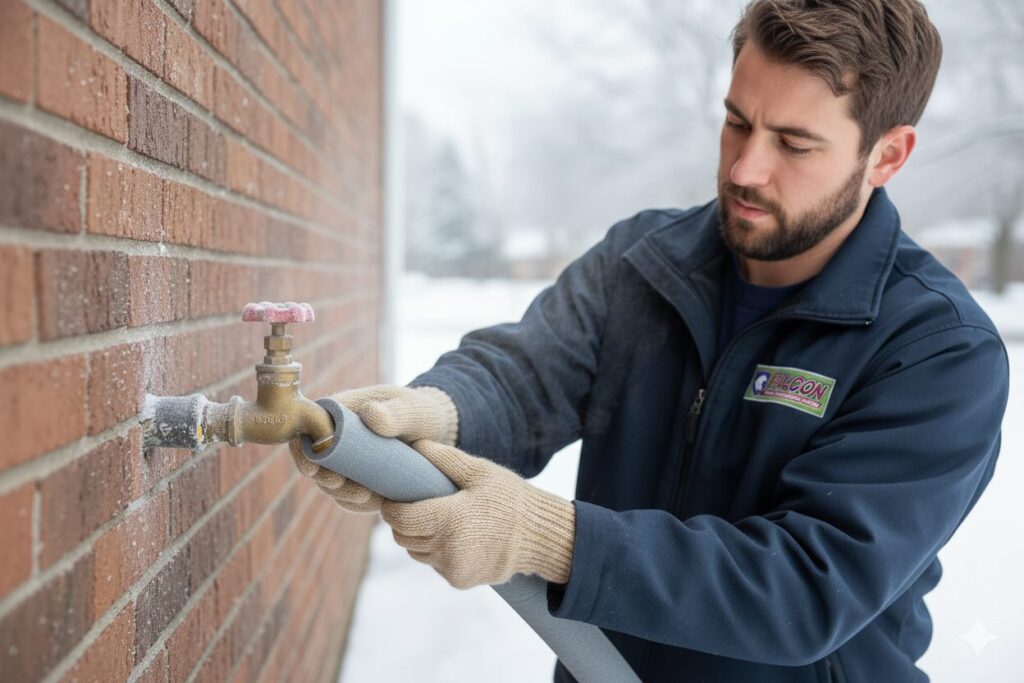
Winter in Northern Virginia brings freezing temperatures, icy winds, and sudden cold snaps that can put serious stress on your home’s plumbing. Pipes, drains, and fixtures are far more vulnerable in January, especially in older homes or properties with exposed plumbing. Falcon frequently responds to winter-related plumbing issues across Sterling and surrounding areas, many of which could have been prevented by recognizing early warning signs.
Slow Drains and Reduced Water Flow
One of the first indicators of a winter plumbing problem is slow drains or reduced water pressure. Cold temperatures can cause grease, soap residue, and debris inside pipes to harden, narrowing the passage for water. In some cases, partial freezing may already be restricting flow. Falcon technicians often identify these issues during winter inspections and clear them before they develop into full blockages or burst pipes.
Frost on Pipes or Visible Condensation
If you notice frost forming on exposed pipes in garages, basements, crawl spaces, or under sinks, it is a serious warning sign. Frost indicates that the pipe temperature is approaching freezing, which greatly increases the risk of bursting. Even condensation on pipes during extreme cold can signal poor insulation. Falcon helps homeowners insulate and protect vulnerable pipes before damage occurs, especially during prolonged January cold spells.
Unusual Noises in Pipes
Banging, whistling, or gurgling sounds coming from your plumbing should never be ignored during winter. These noises often indicate pressure changes caused by freezing water or restricted flow. When water freezes inside a pipe, it expands and can create stress points that eventually crack. Falcon’s plumbing professionals can help to locate the source of these sounds and address the problem before it turns into a costly emergency.
Discolored Water or Metallic Odors
Rusty or discolored water during winter can be a sign of corrosion inside pipes or damage caused by temperature fluctuations. Metallic odors may also indicate deterioration in older plumbing systems. Falcon technicians frequently see these issues surface in January when cold weather accelerates wear on aging pipes. Early detection allows for targeted repairs rather than widespread pipe replacement.
Persistent Dripping or Small Leaks
A small drip may not seem urgent, but during winter it can quickly become a major issue. Leaks often worsen as pipes expand and contract with temperature changes. What starts as a minor leak can freeze overnight and cause a pipe to burst. Falcon Heating, Air Conditioning & Plumbing encourages homeowners to address even minor leaks immediately during winter months to avoid water damage.
Frozen Fixtures and Outdoor Plumbing
Outdoor spigots, hose bibs, and irrigation lines are especially vulnerable in January. If outdoor faucets stop flowing or you notice ice buildup around them, freezing has likely occurred. Indoor fixtures on exterior walls are also at risk. Falcon helps homeowners winterize outdoor plumbing and install frost-proof fixtures that reduce long-term risk and improve reliability.
Why Professional Winter Inspections Matter
Many winter plumbing threats are hidden behind walls or underground, making them difficult to detect without professional tools. Falcon offers winter plumbing inspections that identify vulnerable areas, insulation gaps, and early signs of freezing or corrosion. These proactive services help homeowners avoid emergency repairs during the coldest part of the year.
Recognizing warning signs early can save thousands in repairs and protect your home from water damage. Call us at (703) 596-9998 today to safeguard your plumbing system before winter issues escalate.